
Trade mark rights, even over a famous mark, do not extend to blocking an artist from using a brand name as the title of a creative work - particularly when that use is critical, ironic and genuinely expressive. That is the clear message from the Court of Rome’s recent ruling in the Miss Italia v Ditonellapiaga dispute, which offers a useful framework for how Italian courts approach the collision between trade mark protection and artistic freedom.
What happened
Italian singer-songwriter Ditonellapiaga (real name Margherita Carducci) named her latest album “Miss Italia” - the same name as one of Italy’s most iconic beauty pageants. The cover shows her wearing the pageant’s winner’s crown, in what the court politely described as a “mocking” style. The album’s theme? Challenging the very beauty standards the pageant represents.
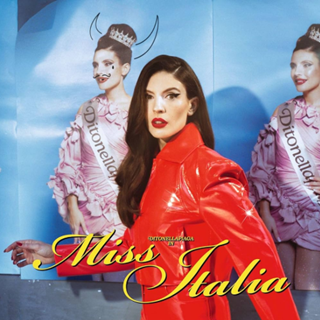
The trade mark owners responded by seeking an urgent injunction before the Court of Rome to block the album’s release, remove it from streaming platforms, and impose financial penalties.
The Court, with decision of April 10th, 2026, rejected the application in its entirety and ordered the claimants to pay the other side’s legal costs.
Why the Court sided with the artist
Italian trade mark law (mirroring the EU Trade Marks Directive) grants owners exclusive rights at three levels: (i) against identical signs on identical goods or services; (ii) against confusingly similar signs on identical or related goods or services; and, (iii) for reputed marks, against any use that, without due cause, takes unfair advantage of or causes detriment to the mark’s distinctive character or reputation. The Miss Italia owners invoked all three levels. The Court rejected each one.
On identity and likelihood of confusion, the Court noted that the registered Miss Italia marks are composite signs: they include stylized figurative elements, a diagonal sash and a specific colour combination - none of which appear in a plain album title. More fundamentally, a beauty pageant and a music record operate in entirely different markets, and no evidence was adduced to show consumer overlap. The court reaffirmed the well-established principle that likelihood of confusion requires both sign similarity and product/service proximity - and here, neither threshold was met.
On reputed marks, the Court acknowledged that Miss Italia undoubtedly enjoys a strong reputation. However, it refused to treat reputational harm as self-evident. The owners bore the burden of proving either unfair advantage (i.e. that the artist was free riding on the mark’s drawing power) or detriment to its reputation or distinctive character. They did not discharge that burden, and the Court declined to presume it from the mere fact of the mark’s fame.
On the “due cause” defence, this is where the ruling breaks new ground. The court held that an album title performs a fundamentally different function from a trade mark: it identifies a creative work, conveys its content and embodies the author’s expressive choices. Using “Miss Italia” to evoke a social archetype (critically and ironically) constituted a legitimate artistic use that could not be substituted without losing its communicative power. The Court explicitly balanced trade mark protection against the right to artistic expression under the Italian Constitution, the EU Charter of Fundamental Rights and the European Convention on Human Rights, drawing also on the EU Trade Marks Directive’s recital recognizing fair artistic use.
What this means for brand owners
- Fame alone won’t win the case. Even for reputed marks, owners must lead concrete evidence of unfair advantage or reputational harm. Courts will not fill the evidentiary gap with presumptions based on notoriety alone;
- Artistic use is a genuine and robust defence. Where a sign is used to identify a creative work - not to sell goods or services - the functional distinction from trade mark use will be a significant hurdle for claimants to overcome;
- The limits remain. Genuine free-riding, dilution of distinctiveness and reputational damage are still actionable. The artistic defence is not unlimited, but it requires more than discomfort with the message an artist is conveying.
/Passle/64ef1c9c95186b4923406017/MediaLibrary/Images/2026-09-10-11-44-42-935-6aa2982a842cad5c5a74c193.png)
/Passle/64ef1c9c95186b4923406017/MediaLibrary/Images/2026-07-21-10-31-24-032-6a5f4a7c1b7078c1ea9a85a1.jpg)
/Passle/64ef1c9c95186b4923406017/MediaLibrary/Images/2026-08-19-14-13-52-053-6a85ba20d8729b0fe9ed3cb1.jpg)
/Passle/64ef1c9c95186b4923406017/MediaLibrary/Images/2026-08-04-15-18-04-393-6a7202ac1468addd2c3b6d62.jpg)